
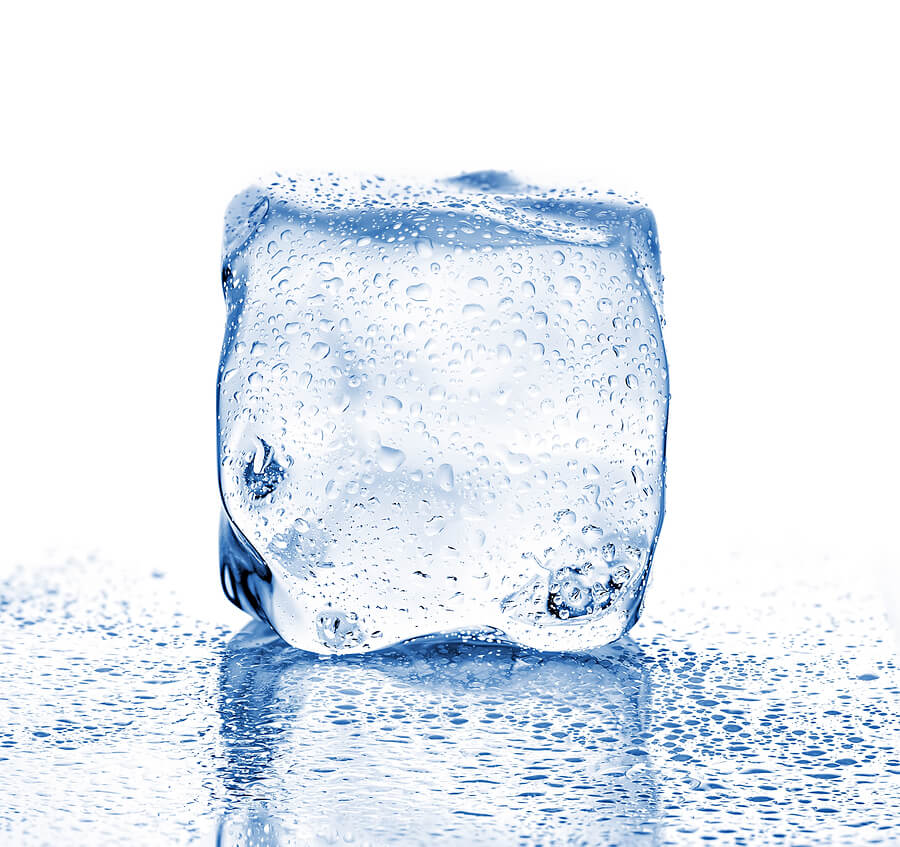
Finding fun, affordable science activities for kids doesn’t have to be hard. Skip the pricey kits and endless cleanup — one of the best STEM tools is already in your freezer. Ice is safe, simple, and perfect for exploring real physics and chemistry as it shifts from solid to liquid and beyond. Whether you’re teaching a class or tackling a science fair, these four ice experiments prove big discoveries can start small.
1. Testing the Effects of Rising Sea Levels
This experiment visualizes the difference between melting sea ice (like at the North Pole) and melting land ice (like glaciers or the South Pole).
Materials Needed
- Two clear plastic containers (Tupperware or shoebox size)
- Modeling clay or Play-Doh
- Cold tap water
- Ice cubes
- A permanent marker
- Ruler
Instructions
Part A: The North Pole (Sea Ice)
- Fill one container roughly one-third full with cold water.
- Drop three or four ice cubes directly into the water.
- Let the water settle, then mark the water level on the outside of the container with the marker.
- Allow the ice to melt completely at room temperature.
- Check the water level again. Did it rise? (Spoiler: It should stay roughly the same because the ice was already displacing the water).
Part B: The South Pole (Land Ice)
- In the second container, press a mound of modeling clay into one side to represent land.
- Pour water into the container so it surrounds the “land” but does not cover it.
- Place three or four ice cubes on top of the clay (not in the water).
- Mark the water level on the container.
- Allow the ice to melt so it runs off the “land” and into the “ocean.”
- Check the water level. It will have risen.
The Science Behind It
This project demonstrates displacement. In the first container, the ice was floating in the water. As it melts, it simply changes state, taking up roughly the same amount of space it displaced while solid. In the second container, you introduced new water to the system. The ice was stored on land, and when it melted, it flowed into the ocean, increasing the total volume of liquid. This helps students understand why melting glaciers are a significant concern for coastal cities.
2. Changing the Melting Rate of Ice
Ice doesn’t always melt at the same speed. External variables can accelerate or slow the process. This experiment teaches students about variables, controls, and insulation.
Materials Needed
- Four identical drinking glasses
- Four ice cubes of equal size
- Salt (1/4 teaspoon)
- Sugar (1/4 teaspoon)
- Sand (1/4 teaspoon)
- Stopwatch or clock
Instructions
- Place the four glasses on a table away from direct sunlight or heat sources.
- Place one ice cube in each glass.
- Glass 1 (Control): Don’t add anything.
- Glass 2: Sprinkle the salt over the ice.
- Glass 3: Sprinkle the sugar over the ice.
- Glass 4: Sprinkle the sand over the ice.
- Observe the glasses every 5 minutes for half an hour. Record which cube is melting the fastest.
The Science Behind It
You’ll find that the salted ice melts the fastest. Salt lowers the freezing point of water, a process called “freezing point depression.” This is why trucks spread salt on icy roads in winter.
Sugar also lowers the freezing point, but not as effectively as salt. The sand, depending on the lighting, might act as an insulator (keeping the ice cold) or absorb heat, warming the ice, but it generally doesn’t undergo the chemical reaction that salt does. This experiment is excellent for teaching the scientific method and the importance of having a “control” group.
3. Lifting Ice Without Touching It
This experiment looks like a magic trick, but it is pure chemistry. It challenges students to lift an ice cube out of a glass using only a piece of string.
Materials Needed
- A glass of cold water
- Ice cubes
- Standard cotton string or yarn
- Salt
Instructions
- Place an ice cube in the glass of water.
- Cut a piece of string about 12 inches long.
- Lay the string across the top of the ice cube.
- Try to lift it. (It won’t work yet).
- Lay the string back on the ice. Sprinkle a generous pinch of salt over the string where it touches the ice.
- Wait about 60 seconds. Don’t bump the glass.
- Gently lift the string by the ends. The ice cube should be stuck to the string, allowing you to lift it out of the water.
The Science Behind It
When you sprinkle salt on the ice, it lowers the freezing point, causing a thin layer of the ice to melt around the string. However, as the salt dissolves into the surrounding water, the concentration decreases. The water cools down again and refreezes. This refreezing process traps the string inside the ice, acting like an anchor. It’s a simple but effective demonstration of reversible state changes.
4. Simulating Ice Growth (Supercooling)
This is the most visually spectacular experiment on the list. It requires patience, but the payoff is creating “instant ice” towers.
Materials Needed
- Unopened bottles of purified or distilled water (mineral water doesn’t work as well)
- A freezer
- A bowl filled with ice cubes
Instructions
- Place the water bottles on their sides in the freezer.
- Set a timer for 2 hours and 45 minutes. (Freezer temperatures vary, so you may need to test this. You want the water to be liquid but freezing cold.)
- Gently remove the bottle. It should still look like liquid water.
- If you shake it hard, it might freeze instantly inside the bottle.
- For the tower effect: Open the bottle carefully.
- Pour the water slowly onto the ice cubes in the bowl.
- As the water hits the ice, it should instantly turn to slushy ice, building a tower or stalagmite structure.
The Science Behind It
This demonstrates “supercooling.” Water usually needs a nucleation point — an impurity or a scratch in the container — to start forming ice crystals. Purified water lacks these impurities. You can cool it below 32°F (0°C) without it freezing solid. When you pour it onto the ice cubes in the bowl, the ice cubes provide the nucleation points. The supercooled water crystallizes upon contact, transitioning from liquid to solid right before your eyes.
Discussion Questions for Parents & Teachers
To get the most out of these projects, ask your students or children the following questions:
- Why did the salt work better than the sugar?
- How does the “Sea Level” experiment relate to real-world news about climate change?
- What would happen if we used hot water instead of cold water for the string experiment?
- Why do you think we need purified water for supercooling?
Frequently Asked Questions
Q: Why does salt make ice melt?
Salt disrupts the crystal lattice of ice. It lowers the freezing point of water, meaning the water has to be much colder than 32°F to freeze. This causes the ice to turn back into liquid water.
Q: Is dry ice the same as regular ice?
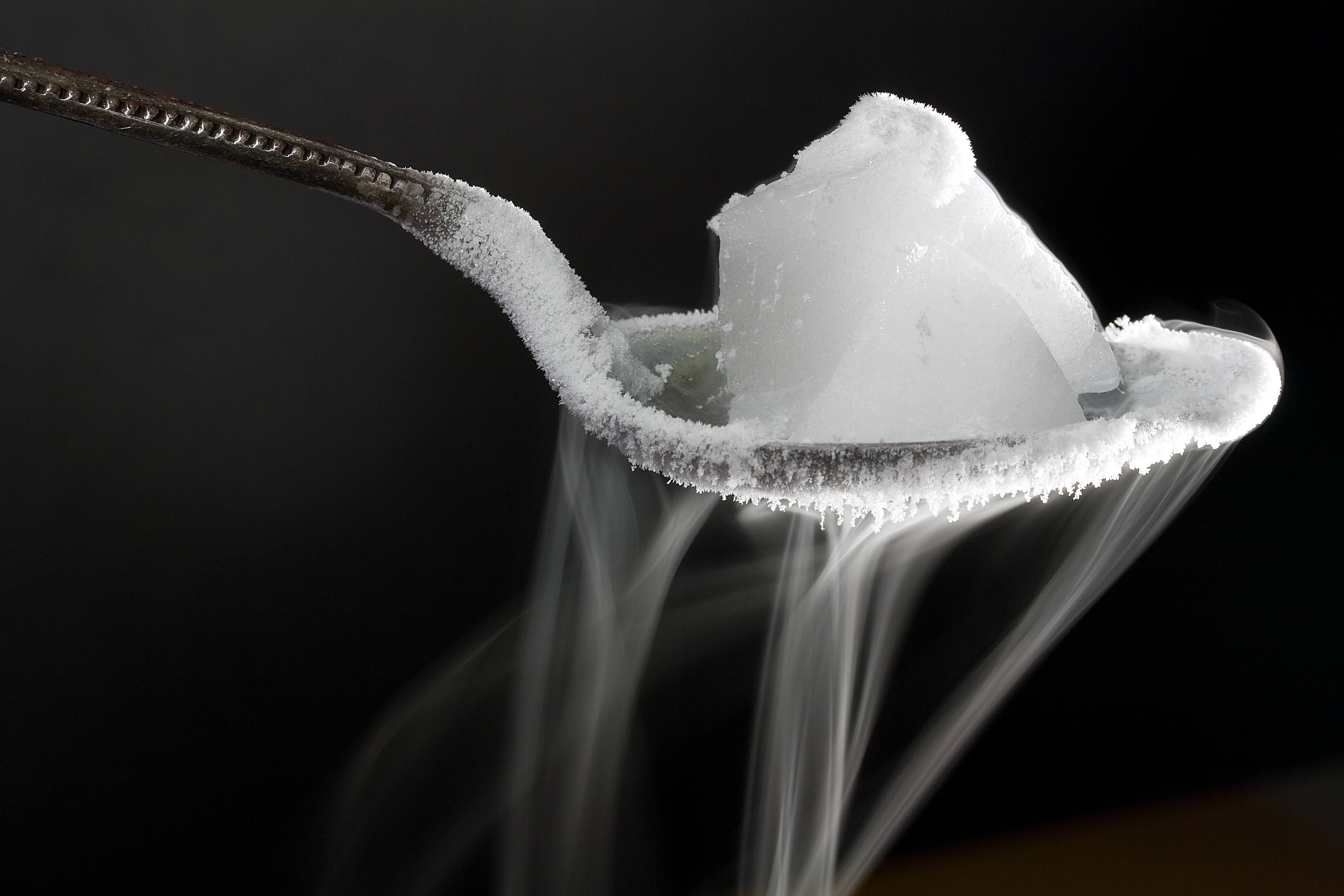
No. Regular ice is frozen water (H2O). Dry ice is frozen carbon dioxide (CO2). Dry ice is much colder (-109.3°F) and sublimates directly into gas rather than melting into liquid. It requires special safety gloves to handle.
Q: Why does ice float in water?
Water is unique because it becomes less dense when it freezes. The molecules in ice expand and form a crystalline structure that takes up more space than liquid water. Because it is less dense, it floats.
Q: How long does it take for water to freeze?
This depends on the volume of water and the temperature of the freezer. A standard ice cube tray usually takes about 3 to 4 hours to freeze completely in a home freezer.
Q: Can we eat the results of these experiments?
For the projects listed above, generally yes, provided you used clean cups and food-grade ingredients (like salt and sugar). However, never eat science experiments that use chemicals or non-food items like sand or clay.
Q: What age group are these experiments for?
These projects are ideal for K-8 students. Younger children (K-3) will enjoy the visual magic of the string-and-tower experiments, while older students (4-8) can dive deeper into the physics of density and freezing points.
Q: Why is the supercooling experiment not working?
If the water freezes inside the bottle before you pour it, your freezer is too cold, or you left it in too long. Check it after 2 hours next time. If it doesn’t freeze when poured, it wasn’t cold enough.
Q: What’s the difference between melting and dissolving?
Melting is a phase change from solid to liquid due to heat. Dissolving is when a solute (like salt) is incorporated into a solvent (like water) to form a solution.
Leave A Comment